
The post-holiday winter season for us was packed with training sessions, course development meetings, a few conferences and events, and many client meetings. Looking ahead, we are excited to announce that we will be attending the Nicholasville Police Department Car Show and Festival, the department’s annual D.A.R.E. fundraiser. The event takes place at East Jessamine High School, Nicholasville, KY, on May 30th, 10:00 AM-2:00 PM. The Drug Abuse Resistance Education program that is provided to K-12 students aims to give children the skills and knowledge to resist peer pressure to use tobacco, drugs, and alcohol.
During the event we will be holding two raffles. One for a LifeVac anti-choking device, no purchase required. Simply show us that you have subscribed to the newsletter or "like" us on Facebook. The LifeVac device has helped save thousands of lives, ages ranging from infants to elderly. It helps clear the airway without forceful compressions or pushing the blockage down further into the throat. They're available for purchase on our website here, or you can wait until the raffle and win one for free.
The second raffle will require a business card, and a company of at least 10 or more employees. The company chosen will win a free 1 hour Survive Your Environment course. This course features 7 lessons that will enhance your staff's ability to quickly secure their environment during an active aggressor event. It will teach them to divide rolls and work as team under duress. This course is majority lecture-based information with two brief walkthroughs.

M3 Case Study Completed
After several months of development, training, and tracking results, we have completed a case study on our Modern Microlearning Model, or M3. We introduced the M3 concept in our last newsletter, and now we have the data to support its effectiveness.
We developed this training framework as a solution for our clients who struggle to scale training, maintain a consistent schedule, and track results. The objective of this study was to test the foundational theories of M3 regarding the comprehension and retention of safety and security skills delivered within specific workplace environments. Our study found that staff members had a higher rate of retention with our recommended training schedule and course content than they had previously with other education sources.
Download the full redacted study for free from our website

See Something Say Something
What do terror alerts mean, what should you do if they go out, when do you say something, and who do you say it to? With tensions rising across the globe, many are worried that attacks on U.S. soil could at a higher risk. It is worth noting that the National Terrorism Advisory System has no current alerts or bulletins for the American citizens to be aware of.
Many of the situational awareness skills and concepts that we apply to our everyday lives are still relevant and useful when staying alert to potential acts of terror. See something say something is a campaign that the U.S. Department of Homeland Security created shortly after the terrorist attacks that occurred on September 11th, 2001. The long running initiative aims to educate the public on indicators of terrorism and terrorism related crime. While certain acts of terror are virtually impossible to detect, many plans have warning signs.
A seemingly innocuous tourist taking photos could be an attempt to map the entry and exit points of an important building. We are not suggesting that you call the police on anyone with a cell phone outside a government building. Context is important, and the campaign stresses this. There are several other behaviors and actions that are important to note before or when you report suspicious activity to local or federal law enforcement.
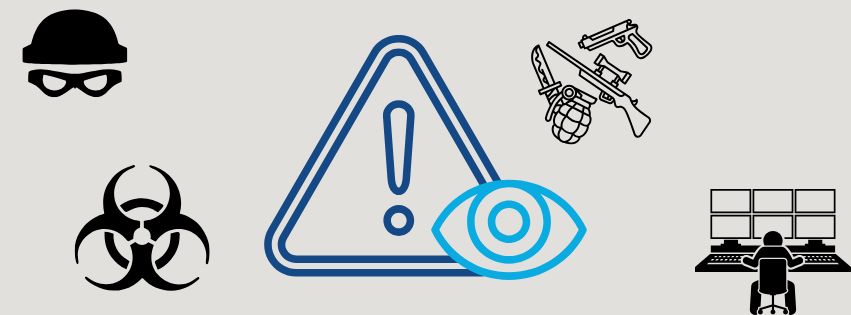
- Expressed or Implied Threat. Communicating a spoken or written threat to commit a crime that could harm or kill people or damage a facility, infrastructure, or secured site.
- Observation or Surveillance. A prolonged or unusual interest in facilities, buildings, or infrastructure beyond casual or professional interest.
- Photography. Taking pictures or videos of persons, facilities, buildings, or infrastructure in a covert manner, such as photos or video of security related equipment or personnel, infrequently used access points, or structure of a building.
- Theft/Loss/Division. Stealing or diverting items—such as equipment, uniforms, or badges—that belong to a facility or secured site.
- Testing or Probing Security. Challenging or testing a facility's security or IT systems to assess the strength or weakness of the target.
- Aviation Activity. Operating or interfering with the operation of an aircraft that poses a threat of harm to people and property.
- Breach or Attempted Intrusion. Unauthorized people trying to enter a restricted area or impersonating authorized personnel.
- Misrepresentation. Presenting false information or misusing documents to conceal possible illegal activity.
- Eliciting information. Questioning personnel beyond mere curiosity about an event, facility, or operations.
- Acquisition of Expertise. Gaining skills or knowledge on a specific topic, such as facility security, military tactics, or flying an aircraft.
- Cyberattack. Disrupting or compromising an organization’s information technology systems.
- Recruiting/Financing. Funding suspicious or criminal activity or recruiting people to participate in criminal or terrorist activity.
- Sabotage/Tampering/Vandalism. Damaging or destroying part of a facility, infrastructure, or secured site.
- Materials Acquisition/Storage. Acquisition and/or storage of unusual materials such as cell phones, radio controllers, or toxic materials.
- Weapons Collection/ Storage. Collection or discovery of unusual amounts of weapons including explosives, chemicals, or other destructive materials.
- Sector-Specific Incident. Actions which raise concern to specific sectors (e.g., power plant) with regard to their personnel, facilities, systems, or functions.
Most of these warning signs are not noticeable to a passive observer. However, if you work in a facility that manufactures sensitive materials or work for a tech company that has large international clients, these could be relevant criminal acts. Threats, burglaries, or damage, should be repeated to local authorities immediately. Suspicious activity should be reported to local law enforcement as well, there is also a tip line for each state that will analyze the information and share it with the necessary law enforcement officials.
We offer online Situational Awareness and Active Aggressor Response courses for individuals looking to advance their safety skillsets. We offer these courses individually or in our Three Key Course Safety Bundle which also features our Verbal De-Escalation. Purchase today to learn at your own pace from our experienced instructors.
Spring Cleaning Recommendations for the Workplace
We recommend a quarterly training plan for most businesses that we work with. Training that is not reviewed will not be remembered. The less time that passes between training sessions and review discussions, the more likely staff members are to be prepared and confident for emergencies. While finding the time during and after the holidays can be tough, Spring is a great time to review policies, procedures, and security infrastructure.
Emergency Action Plan Review
EAP's should be reviewed yearly and as the working environment changes. An EAP needs to cover weather related emergencies, all five types of workplace violence, fires, gas leaks, and any type of environmental emergency that is specific to the organization. A multi building manufacturing plant in a rural area will have a different EAP compared to a business that rents a space in a building in a high traffic part of town. Businesses with multiple locations will likely need different EAP's based on their buildings and surroundings. A manufacturing plant with several buildings will likely have different policies and procedures building to building depending on their purposes. There are many factors that will influence an EAP, which is why it is important to review them and update regularly.
Drills and Walk-throughs
Performing a fire drill when it is 21 degrees out is probably not a popular idea. Spring is a great time to have the staff participate in drills and walk-throughs that involve getting outside the building. This ensures all emergency exits, alarms, and routes are properly functioning or accessible. Were there any boxes or materials that ended up stacked in front of an exit during the holiday months? Did weather effect locks, hinges, or handles, potentially delaying an exit from the building? Walk-throughs help build muscle memory for emergency situations. Repeated movements create an automatic response when faced with the need to escape quickly.
Facility Threat Assessments
FTAs should be performed as settings and environment change. As new businesses or organizations move into the area the area or building, it could attract new demographics. This could create potential problems if the demographic they are attracting is disruptive or criminal, it could warrant a change in the safety procedures your business currently has. A change in traffic patterns or even an increase in staff members and clientele can change the vulnerability of the office. An FTA should look at the physical setting, the surroundings, security process and policy, reveal trends about local crimes, and provide insights in how to move forward.
Schedule an EAP review, FTA, or learn more about the courses and training sessions that we offer on our courses and services page here.
Review Outdoor Safety with Children
As the weather warms up and kids head outside to play, it's a great time to review traffic and outdoor safety. Accidents happen, and many of them are not the fault of the child, however, some incidents are avoidable if parents or babysitters would take the time to educate them. Children should know what is and is not a toy, what a safe playing area consists of, and have the proper gear to keep them protected from injuries.
Make eye contact with drivers before crossing. In addition to looking both ways before crossing the street, teach children to make eye contact with drivers as they use the cross walk. This will tell them whether the drive sees them and knows that they have the right of way. Remind them to never assume because they are in a designated crossing area, some drivers may be distracted. If the driver is looking at their phone, in another direction, or doesn't look at them as they're waiting to cross, they should know to wait before stepping into the road. If you are in a neighborhood where children regularly play in the street, remind them that they all need to be listening and watching for cars. When they see one, they need to yell to their friends, pause the game, and get out of the street until the car passes. Some kids have limited options when it comes to play areas and the street may give them more room to play kickball or whatever games they enjoy. This is typical for neighborhoods that are not busy or highly trafficked. Even if the street or neighborhood is private, or doesn't see much car activity, children should not play where there is a bend or low visibility. They need to give the drivers as much time as possible to see them and react. 
Do not play inside of or around cars. Playing in cars should not be a habit for children. It is safer for them to not treat the car as a toy or playground, even if the keys are not in reach. They could become trapped in confined spaces or the trunk and be suffocated or die from heatstroke. Keep your vehicle locked and keep your keys out of reach; nearly 3 in 10 heatstroke deaths happen when an unattended child gains access to a vehicle. Older vehicles may not be equipped with Brake Transmission Safety Interlock (BTSI), a system that requires the service brake to be depressed before the transmission can be shifted out of “park." Vehicle rollaway can still be a problem in vehicles equipped with a keyless ignition or push-button start feature when the vehicle has been turned off and not shifted into park. This could put children and their neighbors in danger if they were to move shift the car out of park and it begin to move into the street or in an area where other children are playing.
Water and pool safety. Creeks, ponds, and artificial bodies of water are beginning to thaw or open for the season. Be sure that gates, locks, and pool covers are functioning and have not been damaged throughout the winter. If there are ponds, rivers, or other natural water ways in the area where your child plays, review water safety with them. They should never be alone or unsupervised around water. Two inches of water is all that is needed to block the airways of a child or adult if they fall face first or are rendered unconscious in water. If they are fishing or playing near open water, then they need to know they should not be in it unless an adult or older teen is present with them and can help them should they need it. If the weather is warm enough for a swim or a boat day, make sure that life jackets and flotation aids are well-fitting and functioning.
Keep yard tools, fertilizers, and keys, out of reach. Fertilizers, herbicides, and other gardening chemicals are dangerous for people of all ages and even pets. Storing them out of reach and out of sight is the best safety practice. Avoiding outdoor play after spraying or using lawn chemicals is best practice for children’s health and safety. Gardening and lawn tools may look fun to play with but there are an endless number of injuries that are possible when they're used as toys unsurprised. Any lawnmower or heavy equipment keys should be stored high and out of sight as well.
Do not play inside of construction zones. Construction for new homes and buildings typically picks up in the spring and summer. Construction zones can be an exciting place for kids and teens with heavy equipment to climb on, empty buildings to explore, and materials to play with. Though they may seem like an endless fun zone, they're full of hazards. Criminal charges for trespassing and property damage can range from misdemeanors to felonies. Remind children to stay out of construction zones, even if none of the equipment is operating. Falls, punctures, and crush injuries are common among individuals who enter these areas without permission and supervision.
Update any helmets and protective gear. Electric scooters, bikes, and ATVs, are all fun modes of transportation for kids, but accidents without the proper protective gear can ruin a summer. Make sure that helmets, knee pads, and other protective gear fits properly, and update as needed. This ties into reviewing traffic safety as well. Children need to know that many of the traffic laws that apply to cars and pedestrians also apply to them when they are riding a bike across town or an ATV through a cul-de-sac.
Thanks for reading!
We hope this newsletter has been beneficial for your safety skillset. APB Consulting Solutions exists to set the standard for both Law Enforcement and the General Public on safety and security solutions. Contact us today to learn more about our courses, training options, and individual safety lessons.




Responses